Field Notes: 5 Hard-Learned Lessons Deploying Hermes Agent in Production
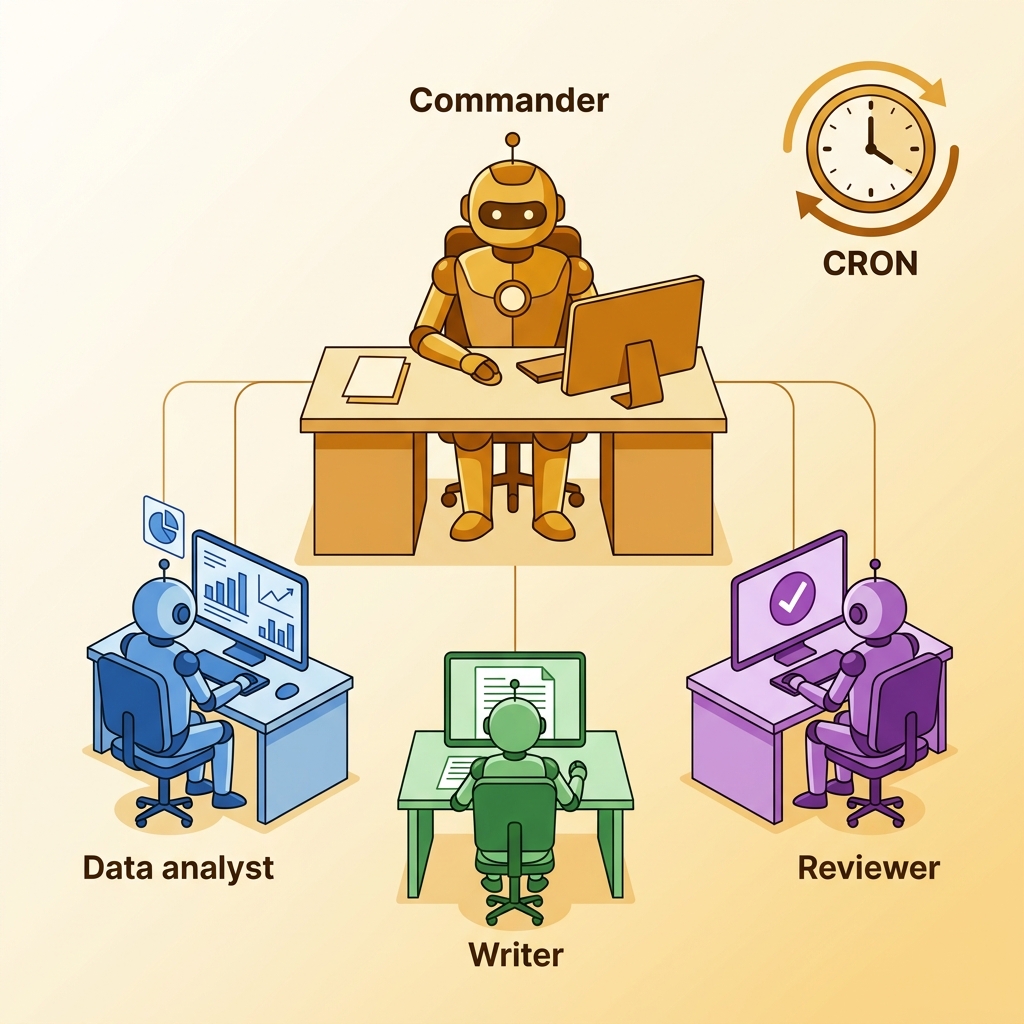
When we first started working with autonomous agents in local development, everything felt magical. You give the agent a task, it spins up tools, reads files, and writes code. However, moving from a local sandbox to a full-blown production environment is a different beast entirely. We recently deployed Hermes Agent to automate a series of complex internal workflows—ranging from codebase audits to automated content generation—and we quickly hit several walls.
In this field note, we are sharing our real-world case study. We have distilled our experiences into five hard-learned lessons about context windows, prompt design, API limitations, memory management, and security. If you are preparing to take your agent from prototype to production, consider this your survival guide.
Lesson 1: Handling Context Windows—It Is Not Infinite
In the era of models boasting 1-million-token context windows, it is easy to become complacent. Our initial strategy was simply to feed the agent everything: the entire codebase, all the documentation, and an endless chain of historical messages.
The Problem: Context Degradation and Cost
We quickly discovered two major issues. First, processing a massive context window for every single turn is incredibly expensive. API costs skyrocketed within the first week. Second, and more importantly, we observed a phenomenon known as "lost in the middle." Even highly capable LLMs struggle to recall specific details buried in the center of a massive prompt. The agent started hallucinating function calls and ignoring crucial constraints defined early in the session.
The Solution: Strategic Context Management
We had to shift our approach from "give it everything" to "give it exactly what it needs right now."
- Implement RAG (Retrieval-Augmented Generation): Instead of dumping the whole repository into the context, we started using search tools (
grep_searchandglob) to pinpoint relevant files. - Truncate History: We limited the conversational history passed to the model. We summarized older interactions and only kept the last 5-10 turns fully expanded.
- Parallel Reads with Limits: We restricted the lines returned by our
read_filetools. If an agent needs to understand a large file, it should read specific functions, not the entire 10,000-line document.
Lesson 2: The Importance of Strict Prompts Over Vague Instructions
When managing a human engineer, you can provide a high-level goal, and they will usually ask clarifying questions to fill in the blanks. When dealing with an autonomous agent in a non-interactive production environment, vagueness leads to catastrophic detours.
The Problem: The Infinite Loop of Guesswork
We initially gave Hermes Agent prompts like: "Fix the UI bugs in the dashboard." The agent would start randomly changing CSS files, breaking layouts, and entering an endless cycle of trial and error. Because it lacked specific boundaries, it tried to rewrite entire components instead of fixing the localized issue.
The Solution: Hyper-Specific, Structured Prompts
We learned that the quality of the output is strictly proportional to the precision of the input. We adopted a mandatory prompting structure for all production tasks:
- Context: What is the current state of the system?
- Objective: What exactly needs to be achieved?
- Constraints: What must the agent NOT do? (e.g., "Do not modify the database schema," "Only use Tailwind utility classes.")
- Validation: How will the agent know it has succeeded? (e.g., "Run
npm run test:uiand ensure 0 failures.")
By treating our prompts as rigorous engineering specifications rather than casual requests, our success rate on autonomous tasks jumped from 40% to over 90%.
Lesson 3: Dealing with API Rate Limits and Fallbacks
In local development, you rarely hit the rate limits of enterprise API providers. In production, where multiple agents might be running concurrent tasks, you will hit them faster than you think.
The Problem: Sudden Terminations
Our automated workflows would frequently crash in the middle of the night. The logs revealed standard 429 Too Many Requests errors. Because Hermes Agent relies heavily on back-and-forth tool calls, a single rate limit error would break the entire chain of thought, causing the agent to fail the task completely.
The Solution: Resilient Execution Strategies
We had to engineer resilience directly into our deployment architecture.
- Exponential Backoff: We implemented robust retry logic with exponential backoff for all API calls.
- Concurrency Limits: We introduced a queuing system to throttle the number of concurrent agents spinning up during peak hours.
- Graceful Degradation: When possible, we configured fallbacks. If the primary reasoning model was rate-limited, the system would temporarily degrade to a faster, smaller model for simpler sub-tasks like text formatting or simple regex searches.
Lesson 4: Why Memory Management Matters for Long-term Stability
One of the most powerful features of Hermes Agent is its ability to save memories—storing facts, user preferences, and project context across sessions. However, unmanaged memory is a recipe for disaster.
The Problem: Contradictory Memories
Over time, the agent accumulated hundreds of memories. Some were outdated ("Use the old v1 API endpoint"), while others directly contradicted new instructions. The agent's global state became bloated, causing it to apply the wrong project conventions to new workspaces.
The Solution: Scoped and Mutable Memories
Memory must be treated like a database: it requires maintenance, schema design, and cleanup.
- Strict Scoping: We strictly enforced the separation between
globalandprojectmemory scopes. Personal preferences go to global; project-specific architectural decisions go to project memory. - Memory Audits: We introduced a routine where the agent audits its own memory file weekly, consolidating redundant facts and archiving outdated instructions.
- Explicit Overrides: We taught users to explicitly instruct the agent to "forget" old facts when updating a system. ("Forget the previous rule about using REST. Remember that we now exclusively use GraphQL for this project.")
Lesson 5: Establishing Security and Permission Boundaries
Finally, the most critical lesson was about security. An autonomous agent with shell access is a powerful tool, but it is also a massive security risk if not properly constrained.
The Problem: Unintended Collateral Damage
During a beta test, an agent was tasked with "cleaning up temporary files." Because it misunderstood the workspace root, it attempted to delete critical system configurations. Thankfully, it was running in an isolated container, but the scare was real.
The Solution: Zero-Trust Agent Architecture
You cannot rely on the LLM's common sense for security.
- Containerization: Agents must run in ephemeral, isolated Docker containers with strictly limited volume mounts.
- Principle of Least Privilege: The agent's shell environment should only have the permissions necessary for the task. If it does not need network access, disable it.
- Approval Workflows: For any action that modifies production state (e.g., committing to main, dropping a table, deploying code), we instituted a mandatory "Human-in-the-Loop" (HITL) approval step. The agent can draft the change, but a human must click "Approve."
Conclusion: The Path to Agentic Workflows
Deploying Hermes Agent into production has fundamentally changed how our engineering team operates. The initial friction was high, but solving these challenges—context bloat, prompt ambiguity, rate limits, memory chaos, and security—has yielded incredible returns in productivity.
Agents are not magic; they are complex software systems that require rigorous engineering, monitoring, and maintenance. Treat them with the same discipline you would apply to a microservice architecture, and they will become an indispensable part of your team.
* Ready to master Hermes Agent?If you want to dive deeper into these concepts and learn how to build robust, production-ready agentic workflows from scratch, join our comprehensive 7-Day Hermes Agent Bootcamp. Start your journey today and avoid the pitfalls we encountered!