Hermes Agent vs AutoGPT: Honest Comparison and Guide
The rise of autonomous AI agents has revolutionized how developers and businesses approach automation. At the forefront of this revolution are two prominent tools: Hermes Agent and AutoGPT. While both aim to accomplish complex tasks autonomously, their fundamental philosophies, architectural designs, and ideal use cases are vastly different.
In this comprehensive guide, we will dive deep into the ultimate showdown between Hermes Agent and AutoGPT. We will compare them across key dimensions to help you make an informed decision on which framework best suits your project requirements and engineering standards.
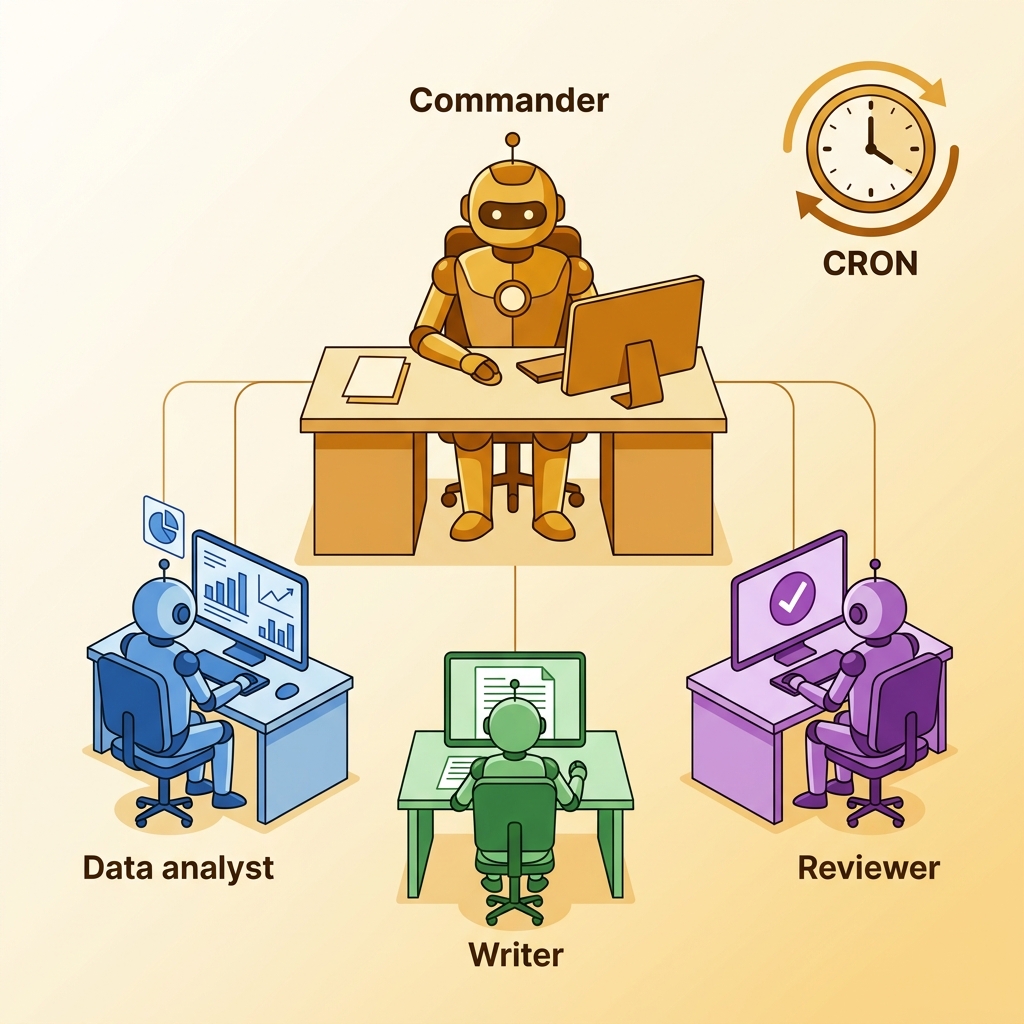
Core Philosophy: Reliability vs. Open-Ended Autonomy
Before analyzing the technical specifics, it is critical to understand the contrasting philosophies that drive the development of these two AI agents.
Hermes Agent is built on the principle of reliable, deterministic execution. It is designed to be a professional developer's assistant, integrating seamlessly into existing CI/CD pipelines, local CLI environments, and structured workflows. Hermes doesn't guess; it follows explicit instructions with surgical precision. It assumes that the user knows what they want and uses AI to bridge the gap between intent and implementation efficiently and safely. AutoGPT, on the other hand, is an experimental marvel that focuses on open-ended, AGI-like autonomy. Its core philosophy is to push the boundaries of what Large Language Models (LLMs) can do with minimal human intervention. You provide a high-level, open-ended goal (e.g., "Analyze the market for AI tools and build a business plan to make $10,000"), and AutoGPT autonomously attempts to figure out the steps, search the web, execute tasks, and learn from its failures.Architecture
The architectural differences between the two agents perfectly reflect their contrasting philosophies.
Hermes Agent Architecture
Hermes utilizes a tightly scoped, command-driven architecture built for engineering rigor.
* Explicit Action-Observation Loop: Hermes strictly adheres to a Plan -> Act -> Validate cycle. Every action it takes is immediately validated against the system's state or the codebase's compiler/linter.
* Skill System: Instead of relying on generalized prompting, Hermes uses explicit "Skills" (specialized Markdown instructions). These skills narrow the agent's focus, providing specialized workflows for tasks like SEO optimization, UI/UX design, or backend refactoring.
* Context Efficiency: Hermes intentionally manages memory and context aggressively. It does not clutter its context window with speculative paths. Instead, it uses a scoped save_memory tool to store precise, actionable facts across sessions, avoiding the "context bloat" that plagues many agents.
AutoGPT Architecture
AutoGPT is designed for continuous, long-running execution spanning diverse tasks.
* Continuous Autonomous Loop: It operates on a continuous Plan -> Criticize -> Act -> Reflect loop. It evaluates its own thoughts and decisions continuously, which is impressive but computationally expensive.
* Vector-Database Memory: AutoGPT relies heavily on external vector databases (such as Pinecone, Milvus, or local JSON variants) to store and retrieve past thoughts and findings. This allows for theoretically infinite memory but can lead to retrieving irrelevant or outdated context.
* Dynamic Sub-Agents: AutoGPT can spawn temporary sub-agents to handle specific sub-tasks, communicating via natural language prompts. While powerful, this can result in misaligned goals if the prompt degradation occurs down the chain.
Autonomy vs Control
For enterprise teams and professional developers, the balance between autonomy and control is the most crucial deciding factor.
Hermes: Controlled AutonomyHermes enforces Controlled Autonomy. You initiate a specific task ("Refactor this React component to use custom hooks and add unit tests"). Hermes plans, executes, and validates within that strict boundary. It has built-in safety rails—it will not stage or commit code without explicit instructions, and it rigorously protects environment variables and credentials. If it encounters an unrecoverable error or an ambiguous architectural crossroad, it is designed to halt and request human clarification. This makes it highly predictable and safe for production codebases.
AutoGPT: Full AutonomyAutoGPT champions Full Autonomy. It thrives on ambiguity. Once you assign it a broad goal, it will autonomously browse the internet, scrape websites, write files, and attempt to fulfill the goal indefinitely until it succeeds or exhausts its token limit. However, this full autonomy often leads to the infamous "infinite loop" problem. AutoGPT might get stuck trying the same failed API call or scraping the same blocked website in slightly different ways, burning through massive amounts of API credits without yielding a usable result.
Extensibility
Both platforms are extensible, but their approaches cater to entirely different developer experiences.
Extending HermesAdding capabilities to Hermes is remarkably straightforward and requires zero backend coding. Extensibility is handled through the Skill System. A Skill is simply a well-structured Markdown file defining the persona, rules, and step-by-step workflows. This makes it incredibly accessible; anyone who can write clear instructions can create a powerful new capability for Hermes. Furthermore, Hermes leverages your existing local ecosystem (npm, pip, cargo), meaning any CLI tool you have installed can become a tool for Hermes.
Extending AutoGPTAutoGPT's extensibility traditionally relies on Python plugins. It boasts a massive, community-driven ecosystem of plugins allowing it to interact with Twitter, GitHub, email servers, and various third-party APIs. However, building a new plugin requires writing Python code, handling dependencies, and ensuring compatibility with the AutoGPT core engine. While the ceiling for capability is extremely high, the barrier to entry for creating custom workflows is significantly steeper.
Use Cases
Because of their divergent designs, the scenarios where each tool shines are completely different.
When to choose Hermes Agent:* Software Engineering: Complex codebase refactoring, feature implementation, and bug fixing.
* Deterministic Content Generation: Writing structured SEO articles, documentation, or localization.
* CI/CD Integration: Running automated scripts, auditing code quality, and fixing linting errors.
* UI/UX Implementation: Generating pixel-perfect frontend code based on precise instructions.
In short: Any task requiring deterministic, repeatable outcomes and strict adherence to project standards.* When to choose AutoGPT:* Market Research: Autonomous competitor analysis and data aggregation from the web.
* Experimental Workflows: Brainstorming and attempting multiple distinct problem-solving paths.
* Open-Ended Data Gathering: Scraping unformatted internet data to summarize a broad topic.
* AGI Experimentation: Exploring the limits of autonomous decision-making.
In short: Scenarios where you want the AI to brainstorm and explore without human guidance, and where failure or hallucination is acceptable.*Setup and Developer Experience
The onboarding experience for both tools highlights their target audiences.
Hermes SetupHermes is designed for a frictionless, instantaneous developer experience. Since it runs as a CLI application natively within your workspace, installation is typically a single command (e.g., via npm or direct binary download). It automatically hooks into your local Git repository and respects your .gitignore rules out of the box. There is no need to configure complex vector databases or Docker containers. You simply install it, provide your API key, and start working immediately in your terminal.
Setting up AutoGPT requires a more involved DevOps approach. It requires configuring Python environments, managing a substantial .env file with dozens of optional API keys (OpenAI, Pinecone, Google Search, ElevenLabs, etc.), and ideally running the application within Docker containers to ensure sandboxed safety. The initial setup can be daunting, and managing the dependencies requires ongoing effort, especially as the framework rapidly evolves.
Summary Comparison
| Feature | Hermes Agent | AutoGPT |
|---|---|---|
| Core Focus | Reliability, Engineering, Deterministic Workflows | Open-ended autonomy, Research, AGI exploration |
| Architecture | Explicit Action-Observation Loop, Markdown Skills | Continuous Criticize-Act Loop, Vector DB Memory |
| Control Level | High (Controlled Autonomy with strict safety rails) | Low (Full Autonomy, prone to hallucination/loops) |
| Extensibility | Low barrier (Markdown-based Skills, native CLI tools) | High barrier (Python plugins, complex ecosystem) |
| Memory Management | Precise, user-scoped fact storage and file context | Vector embeddings, broad historical context retrieval |
| Ideal User | Software Engineers, Technical Writers, Dev Teams | AI Enthusiasts, Researchers, Data Gatherers |
| Setup Experience | Instantaneous, single-command CLI installation | Complex, requires Python, Docker, and multiple APIs |
Conclusion
Choosing between Hermes Agent and AutoGPT is not a matter of which tool is objectively "better"—it is entirely a matter of selecting the right tool for your specific objective.
If your goal is to explore the frontiers of artificial intelligence, conduct open-ended market research, and you don't mind supervising a somewhat chaotic, experimental process, AutoGPT remains a fascinating and powerful framework.
However, if you are a professional developer or team looking for a reliable, production-grade assistant to execute specific, complex engineering, architecture, or writing tasks with high fidelity, Hermes Agent is the definitive choice. Its focus on controlled autonomy, strict validation, and deep integration into existing developer workflows makes it a true productivity multiplier rather than just a shiny experiment.
Ready to get started?
Experience deterministic, reliable AI automation for yourself. Start building with Hermes today by jumping into our comprehensive developer bootcamp.