Hermes Agent vs Open Interpreter: Terminal Assistant vs Autonomous Worker
As artificial intelligence continues to evolve from simple chatbots to capable action-taking agents, developers are presented with a myriad of tools designed to bring AI into their local environments. Among the most popular and powerful tools in this space are Hermes Agent and Open Interpreter. Both aim to bridge the gap between Large Language Models (LLMs) and local machine execution, but they do so with fundamentally different philosophies, architectures, and target use cases.
In this comprehensive guide, we will conduct a deep dive into the differences between Hermes Agent and Open Interpreter. We will explore how their interaction models differ (terminal-based vs. daemon orchestration), how they handle security and sandboxing, and the critical distinction between stateful memory and ephemeral sessions. Whether you are a developer looking to automate your daily tasks or an enterprise architect designing a fleet of autonomous workers, understanding these differences is crucial for choosing the right tool for the job.
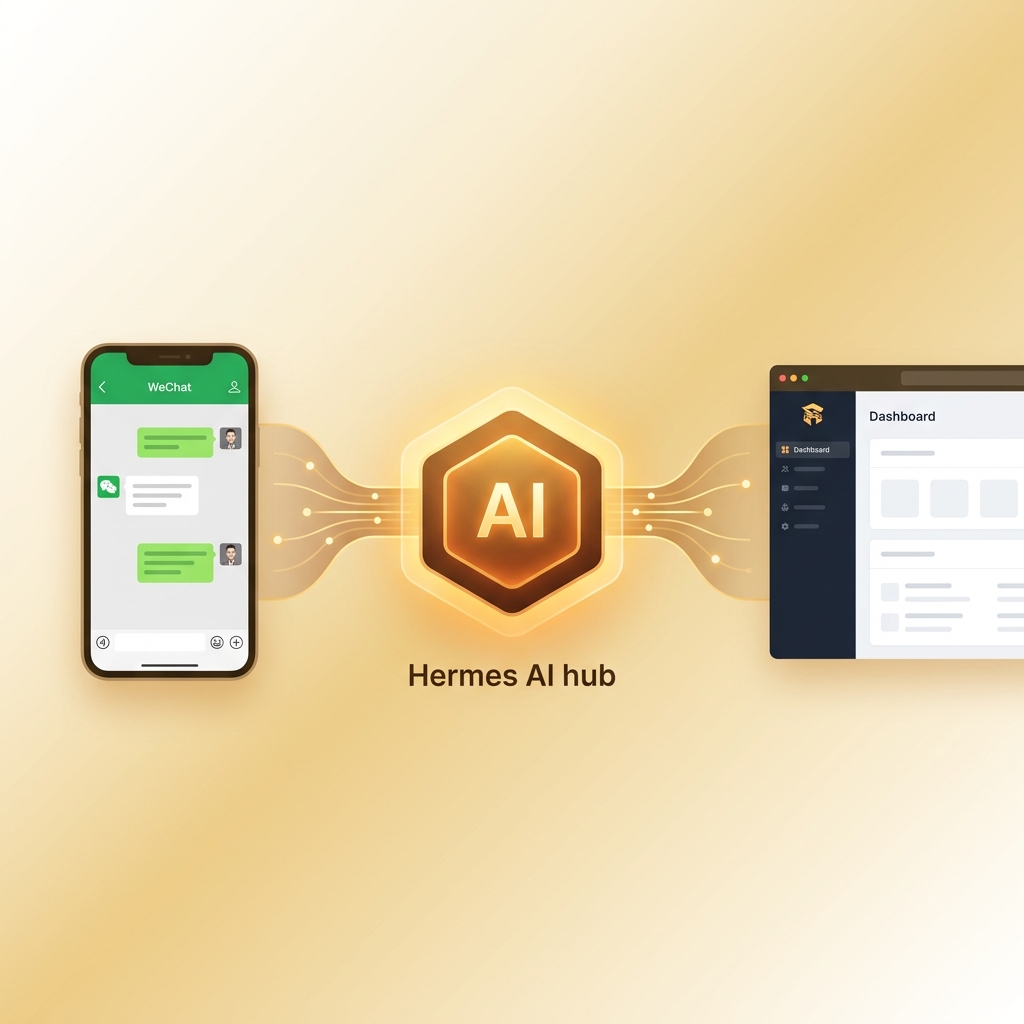
The Core Philosophy: Terminal Assistant vs. Autonomous Worker
To understand the differences between Hermes Agent and Open Interpreter, we must first look at the core philosophy that drives their design.
Open Interpreter: The Terminal Assistant
Open Interpreter is designed to be a highly interactive, terminal-based assistant. It brings the power of an LLM directly to your command line, allowing you to ask questions, write code, and execute commands in a conversational loop. When you run Open Interpreter, you are engaging in a synchronous dialogue. You ask it to perform a task—such as "convert all these images to PNG and resize them"—and it will write a Python script, ask for your permission to run it, execute it in the terminal, and show you the output.
This model is incredibly powerful for ad-hoc tasks, debugging, and rapid prototyping. It acts as an expert pair-programmer that sits right beside you in the terminal. However, its design is inherently tied to the active session. If you close the terminal, the session ends. It requires your continuous presence, or at least an open terminal window, to function effectively.
Hermes Agent: The Autonomous Worker
Hermes Agent, on the other hand, is built from the ground up as an autonomous worker. Instead of simply providing an interactive terminal session, Hermes is designed to run as a daemon or background process. It orchestrates complex, multi-step workflows without requiring constant user supervision.
With Hermes Agent, you don't just chat with the AI; you delegate tasks to it. You might give Hermes a high-level objective, such as "monitor this directory for new log files, analyze them for anomalies, and generate a daily report." Hermes will run in the background, maintaining its state, managing its own sub-processes, and executing the workflow independently. It is less of an interactive assistant and more of a digital employee that works alongside you, handling the heavy lifting of background orchestration.
Architecture and Interaction Model: Daemon vs. Terminal
The architectural differences between the two tools dictate how they are used in practice.
Open Interpreter's Terminal Loop
Open Interpreter operates on a straightforward REPL (Read-Eval-Print Loop) augmented by an LLM. It reads your input, evaluates the necessary steps by generating code, prints the proposed action, asks for confirmation (by default), and then executes the code locally.
Practical Example:If you want to extract text from a PDF, you type the request into Open Interpreter. It will likely generate a Python script using libraries like PyPDF2, execute it, and print the result. The interaction is direct, immediate, and visible. However, this means the process is entirely foregrounded. If the extraction takes hours, your terminal is tied up, and the session's lifecycle is bound to that terminal instance.
Hermes Agent's Background Orchestration
Hermes Agent is designed for persistent, background operation. It utilizes a daemon-based architecture that allows it to manage long-running tasks seamlessly. You can submit a task to Hermes, and it will spawn background processes, monitor their progress, handle errors, and notify you upon completion.
Practical Example:Imagine setting up a continuous integration (CI) pipeline locally. You can instruct Hermes to watch a repository, run tests whenever a change is detected, and summarize the test failures using an LLM. Because Hermes runs as a background orchestrator, it can maintain this loop continuously without occupying your terminal. It handles the orchestration of these distinct events—file system watching, script execution, LLM analysis—cohesively.
Security and Sandboxing
When allowing an AI to execute code on your local machine, security is paramount. Both tools approach this challenge differently.
Open Interpreter: User-Gated Execution
By default, Open Interpreter relies heavily on user confirmation for security. Before executing any generated code, it prompts the user with (y/n). This human-in-the-loop mechanism is the primary defense against malicious or destructive commands.
While Open Interpreter does offer options to run in Docker containers for sandboxing, its primary mode of operation assumes that the user is reviewing the code before it runs. This is suitable for interactive use but becomes a bottleneck for full automation.
Hermes Agent: Robust Orchestration and Boundaries
Hermes Agent places a stronger emphasis on defined operational boundaries and secure orchestration. Because it is designed for autonomous background work, relying on a human-in-the-loop prompt for every action defeats its purpose.
Instead, Hermes employs strict access controls, working directories, and API-level sandboxing. It can be configured with specific policies that restrict which directories it can access, which commands it is allowed to execute, and how much compute resource it can consume. This makes Hermes Agent significantly more suitable for enterprise environments where autonomous actions must be tightly constrained and auditable.
Memory and State Management: Ephemeral vs. Stateful
The ability to remember past interactions and learn from the environment is what separates a simple script from an intelligent agent.
Open Interpreter: Ephemeral Sessions
Open Interpreter is primarily session-based. While you can save and load conversations, the default experience is relatively ephemeral. It remembers the context of the current chat, but once the session is terminated, it largely starts fresh. It doesn't inherently build a long-term, structured understanding of your system, your preferences, or past project contexts unless explicitly managed by the user.
Hermes Agent: Stateful Memory and Long-Term Context
Hermes Agent excels in stateful memory management. It is designed to build and maintain a persistent understanding of the workspace it operates in. Through integrated memory modules, Hermes can save facts, preferences, and project-specific knowledge.
When you ask Hermes to perform a task, it doesn't just look at the current prompt; it queries its long-term memory. For instance, if you previously instructed Hermes that "all Python scripts in this project must use pydantic for validation," Hermes will recall this rule weeks later when generating new code in the background. This stateful memory allows Hermes to become increasingly attuned to your project's unique conventions and requirements over time.
When to Choose Which?
Choosing between Hermes Agent and Open Interpreter comes down to your specific use case:
* Choose Open Interpreter if: You want a powerful, interactive terminal assistant for rapid prototyping, ad-hoc debugging, and executing quick tasks where you want to be actively involved in the loop. It is the ultimate pair-programming companion for the command line.
* Choose Hermes Agent if: You need an autonomous worker that can handle complex, multi-step workflows in the background. If you require stateful memory, robust security boundaries, and the ability to orchestrate long-running daemon processes without constant supervision, Hermes is the superior choice.
Conclusion
The evolution of AI tools is moving rapidly, and both Hermes Agent and Open Interpreter represent significant leaps forward in how we interact with our machines. Open Interpreter brings the conversational brilliance of LLMs to the immediate, interactive space of the terminal. Hermes Agent pushes the boundary further, transforming the AI from a conversational partner into an autonomous, persistent worker capable of managing complex systems in the background.
By understanding these core differences—terminal interaction vs. daemon orchestration, user-gated security vs. policy-driven sandboxing, and ephemeral sessions vs. stateful memory—you can effectively leverage the right tool to supercharge your productivity.
Ready to Build Your Own Autonomous Worker?
If you are ready to transition from interactive chat to true background automation, it's time to dive into Hermes Agent.
👉 Start the Hermes Agent Bootcamp Day 1: Setup and Architecture and learn how to build, configure, and deploy your first persistent AI worker today!