Day 7: Multi-Agent Is Division of Labor, Not Group Chat
Do not use multi-agent because it sounds cool
Multi-agent orchestration is the easiest topic to turn into science fiction: a researcher, writer, reviewer, and operator all working at once. It sounds powerful. The first-principles question is simpler: does it reduce the total cost of finishing the task?
If not, it only splits one confusing problem into several confusing problems.
When the split is worth it
A task is a good candidate when:
- Subtasks are genuinely independent.
- Each subtask has clear input and output.
- A final owner must synthesize the result, not paste it together.
Good examples:
- Competitive analysis: one agent researches sources, one compares features, one reviews risk.
- Code review: one reads the diff, one runs tests, one checks security.
- Content production: one gathers material, one drafts, one checks facts and tone.
- Incident review: one reads logs, one checks deployments, one builds a timeline.
Bad examples:
- The goal is still vague.
- The next step depends on the previous result.
- Every agent is doing the same work.
- Nobody owns the final decision.
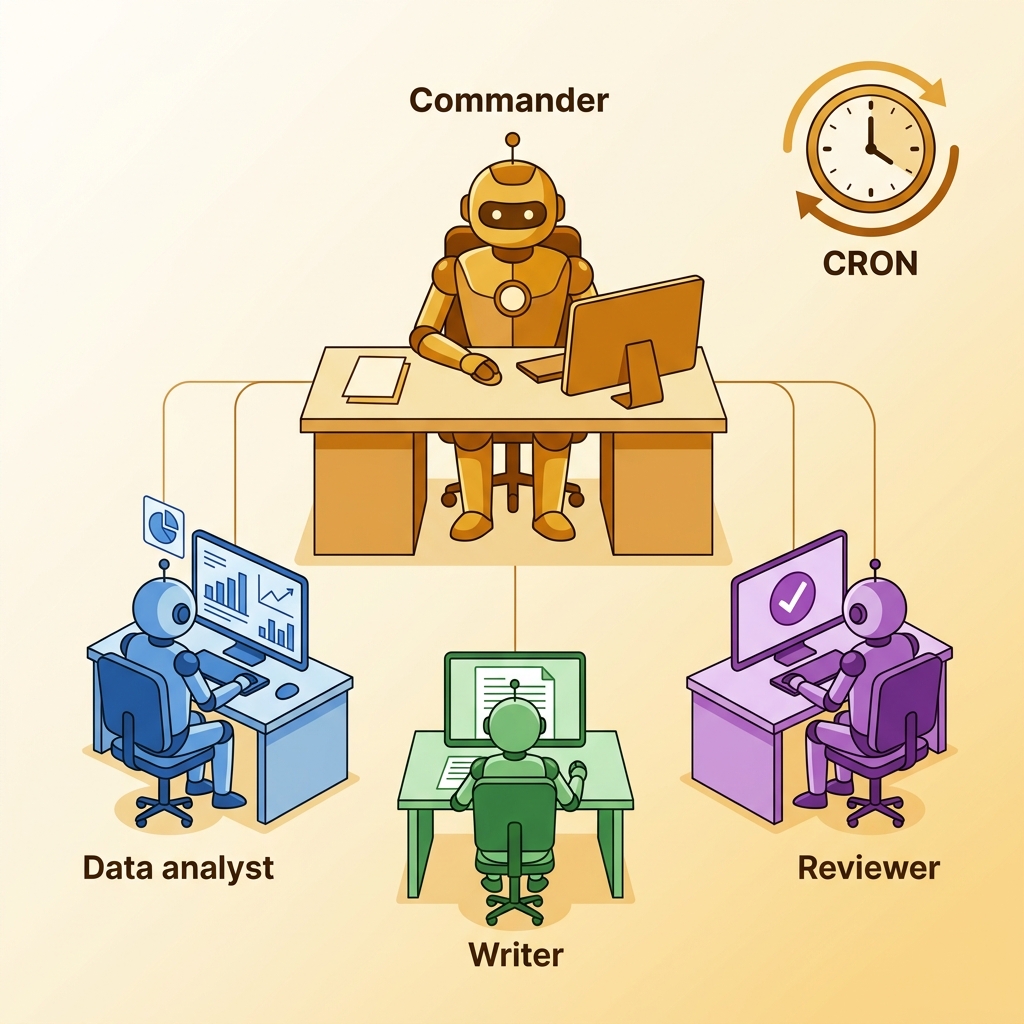
The host agent has a real job
The host is not a clipboard. It must:
- assign responsibilities;
- give every worker an output contract;
- compare conflicts;
- decide what to accept, reject, or investigate.
The human remains the final owner. Sending messages, changing files, deploying services, and spending money should not be delegated to a sub-agent without approval.
A three-agent template
goal: "evaluate whether the Day 1 tutorial is beginner-friendly"
agents:
  researcher:
    job: "read tutorial and source material, list user questions"
    output: "bullets with evidence"
  operator:
    job: "follow the tutorial commands and record friction"
    output: "steps passed / failed"
  reviewer:
    job: "check privacy, permissions, dead links, and misleading language"
    output: "risks with severity"
host:
  job: "merge conflicts and produce final edits"
human_approval:
  - publish
  - delete files
  - push changes
The important part is that every agent has a different responsibility and comparable output.
Common failures
- Giving the same prompt to three agents and receiving three duplicate answers.
- Not requiring evidence or assumptions.
- Letting sub-agents execute high-risk actions.
- Host agent pastes instead of judges.
- Parallelism creates more waiting and coordination than it removes.
Ship this artifact
Create hermes-day-7-orchestration.md:
task: "your real multi-step task"
split_reason: "parallel research / independent checks / separate expertise"
roles:
  - researcher
  - operator
  - reviewer
handoff_format:
  - findings
  - evidence
  - assumptions
  - open_questions
final_owner: "human"
do_not_delegate:
  - publish
  - spend money
  - delete files
The seven-day path now has a product loop: run Hermes, give it durable context, put it where requests happen, process real material, capture repeatable workflows, schedule stable work, and finally split complex work across specialists.
Next step
- Top 10 Hermes Skills - extend Hermes with low-risk Skills first.
- Hermes vs OpenClaw - understand the positioning difference.
Beginner Walkthrough: Your First Multi-Agent Split
Multi-agent work is not opening many chats. For the first run, use three roles: one researches, one simulates execution, one reviews risk, and you decide.
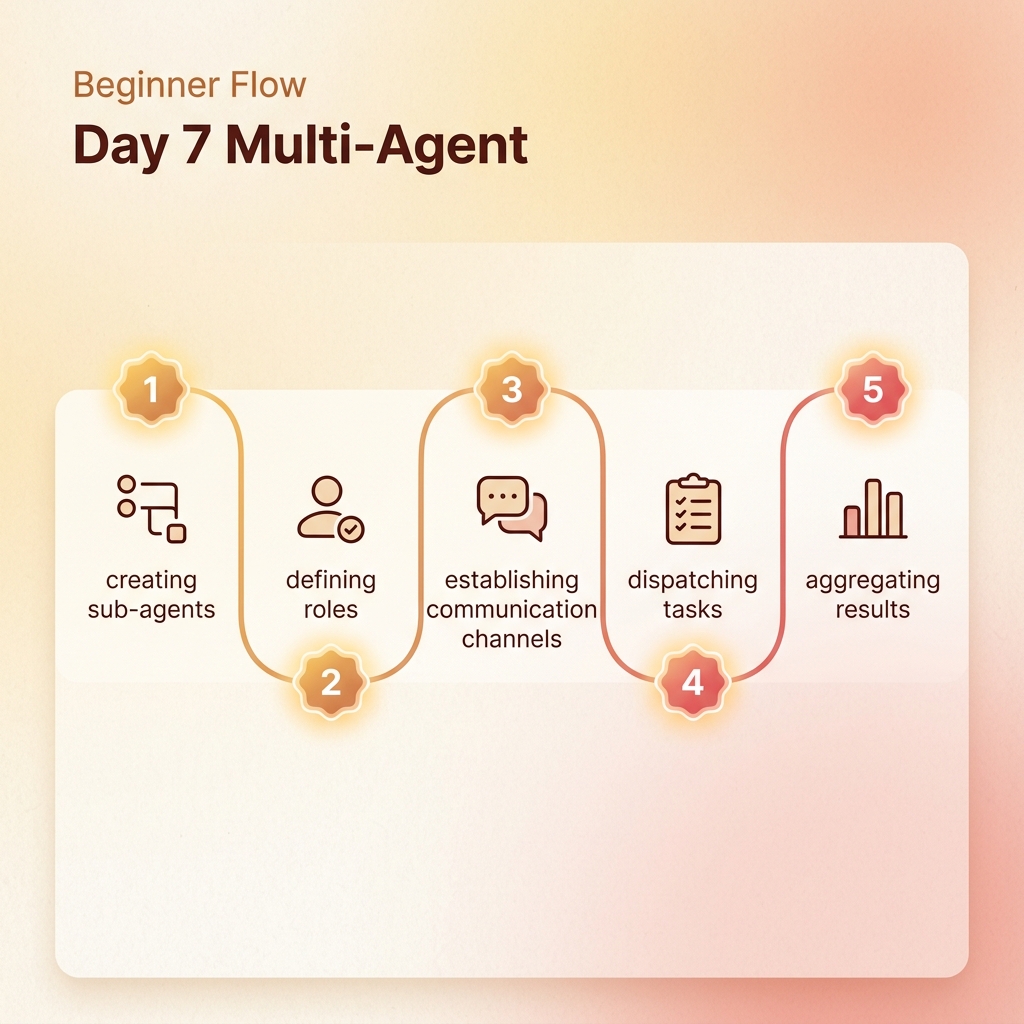
Step 1: Define the goal first
Goal: check whether the Day 1 tutorial works for a complete command-line beginner.
Final artifact: suggested edits only, no automatic file changes.
Step 2: Split three roles
researcher:
  job: "list confusing terms"
  output: "questions + section"
operator:
  job: "simulate the steps and record friction"
  output: "passed / failed / needs image"
reviewer:
  job: "check permissions, secrets, and risky actions"
  output: "severity + suggested fix"
owner: "human"
Step 3: Use one handoff format
Findings:
- what is wrong

Evidence:
- section or step

Suggested change:
- proposed edit

Confidence:
- high / medium / low
Step 4: Isolate with a separate home when experimenting
HERMES_HOME=~/.hermes-day7-research hermes
If you are not sure, keep it as text-only delegation in the main session and do not change configuration.
Step 5: Human merges
Merge researcher/operator/reviewer results.
Do not edit files yet.
Return three lists: must change, should change, do not change yet.
Common Day 7 problems
- Every agent does the same task: roles are unclear.
- Output is long but unusable: no shared handoff format.
- Sub-agent edits files directly: risky actions were not reserved for the human.
- Parallelism is slower: tasks actually depend on each other.
Leave this file behind
task: "review beginner tutorial"
roles:
  - researcher
  - operator
  - reviewer
handoff_format:
  - findings
  - evidence
  - suggested_change
  - confidence
human_approval_required:
  - edit files
  - publish
  - push to GitHub